

Brandon Johnson develops renovation plan for Utah’s Jeremy Ranch
Golf Course Architecture – By Richard Humphreys
“It is time to reinvest back into the course for continued growth and success for the next 40 years,” says architect

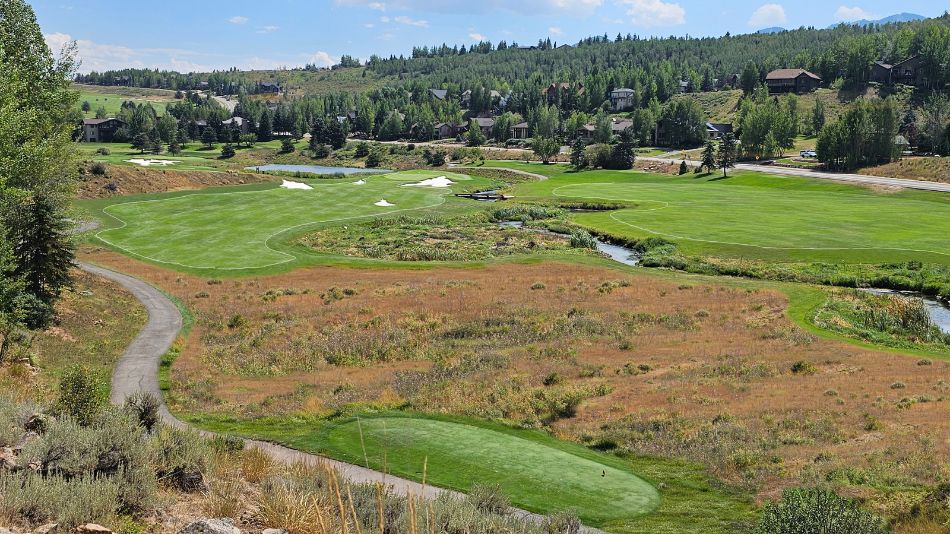
Moeller said: “The life expectancy audit included a comprehensive examination of various components that impact the short- and long-term performance of the greens. The specific evaluation process included an agronomic inspection of all greens to identify factors that impact the physical performance, such as the construction method, surface and internal drainage, green sizes, useable area for hole locations, growing environments, entrance and exit locations, grass species composition, overall turf quality and historic performance.”
Turfgrass sampled ten greens with a soil profiler for a visual evaluation and assessment of layers and organic matter content. It removed and sent 18 PVC core samples from six greens to a soil testing laboratory for analysis, dug test holes on five greens to visually evaluate the entire rootzone profile and gravel layer, measuring the field infiltration rate of the gravel layer, and created an inventory of the rootzone depths from the test holes and PVC core samples. Turfgrass then provided insight into greens mix performance and composition.
“Our intent is to restore the original sizes and shapes of greens while making targeted expansion and contour modifications to introduce new pin locations,” said Johnson. “We will retain the existing character of greens and use that as a guide when redesigning any that will increase pin locations, setup variety and playability. Greens that currently have limited pinnable areas due to severe slopes and pitches will be recontoured to make more playable with increased setup options.”
Proposed work on bunkers aims to enhance the character, aesthetics and strategic interest of the hazards, as well as address drainage issues, sand contamination, eroding slopes, faces and edges, and their locations.
“We will also address problematic drainage areas on fairways,” said Johnson. “While we are still contemplating the variety, we will regrass all fairways to establish a consistent stand of healthy and high performing turfgrass.”

Other work includes realigning and expanding existing tees, adding new forward and back tees, removing some cart paths and rerouting others to hide them from sight better.
“Also, we will help blend the existing natural and native surrounding slopes and valley floor along the creek into the overall golf course character and aesthetic,” said Johnson. “And convert existing maintained turf areas into native turf and vegetative areas that are in character with the natural surrounding landscape.”