
This is part 1 of a 2-part series that covers how to build a USGA variable depth green and select a rootzone with optimal performance characteristics.
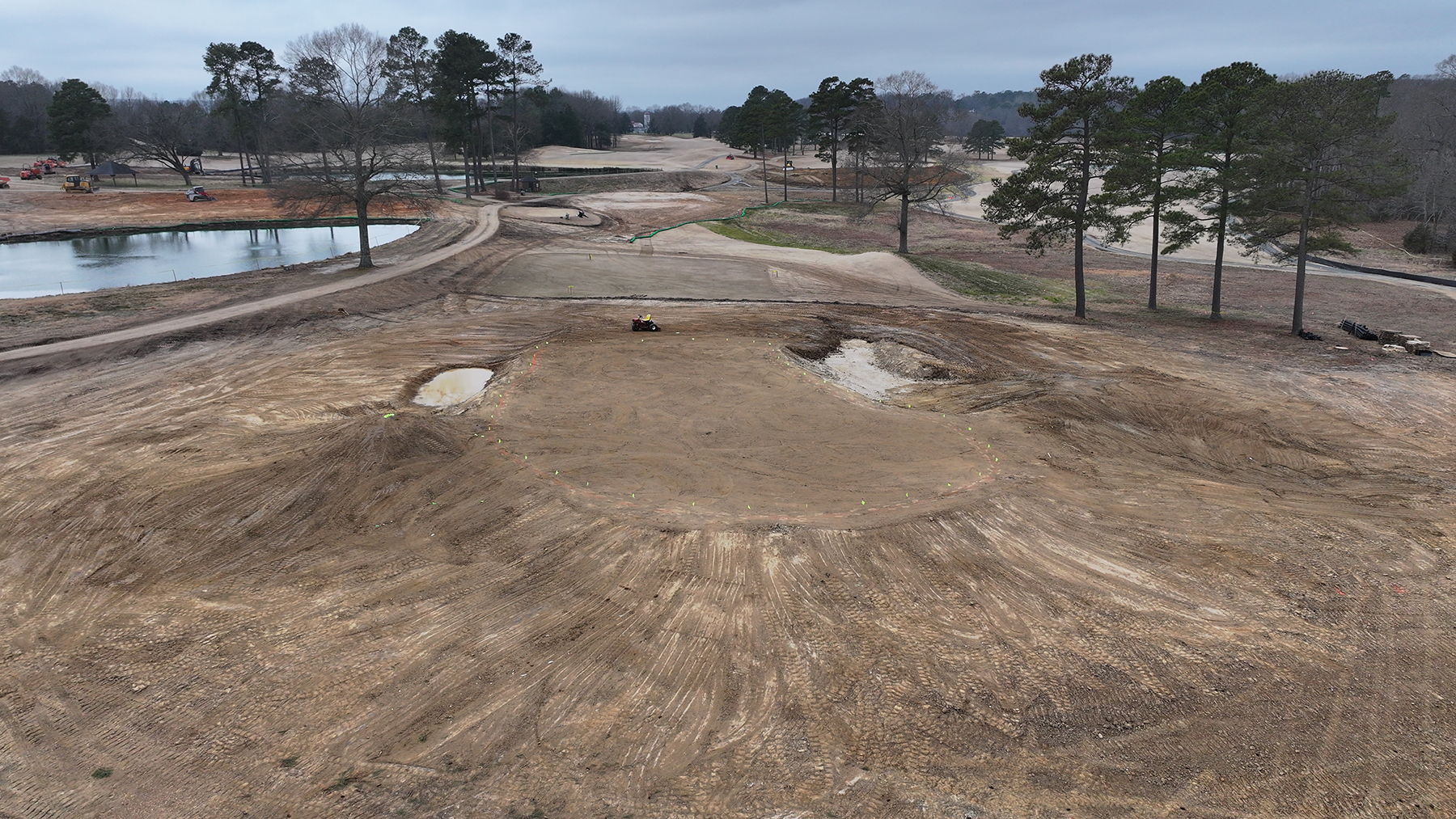
Building a model green from the existing rootzone, bunker sand, or imported soil provides the agronomy team with a preview of the final surface and helps them determine variable depth zones.
The current pace of golf course construction projects – both building of new courses and large-scale renovations of existing courses – is at the highest level in well over a decade. Most renovation activity across the country is focused on updating infrastructure and making architectural changes/restorations, including putting green reconstruction. Traditionally, the USGA green construction method was the easy choice for how to build greens. This tried-and-true method is still the norm, but building greens with variable rootzone depths is becoming more popular. High-profile courses including Winged Foot, Merion, Seminole, Baltusrol, Olympic Club, Scioto, and Crooked Stick have all utilized variable depth construction with excellent results. This article highlights the benefits of building variable depth greens, how it’s done in the field, and some FAQs about the method.
What are Variable Depth Greens?
The USGA greens construction method specifies that the rootzone depth should be 12-inches +/- 1 inch. However, challenges with moisture extremes on mounds or low-lying areas can develop in response to this uniform rootzone depth. In the early 2000s, researchers from Michigan State University investigated the concept of building variable depth greens – e.g., shallower mix depths on high spots and deeper mix depths in low-lying areas – and found it improve moisture uniformity. The research was intriguing to many, but many practitioners felt executing this type of construction was a too challenging/risky. Technology advancements coupled with an increase in putting green rebuilding projects in the last decade has allowed the industry to now utilize variable depth construction more than ever before.
What are the Advantages and Disadvantages of Variable Depth Greens?
The primary benefit of variable depth greens construction is improved moisture uniformity on sloped greens compared to a consistent 12-inch deep rootzone across an entire green with surface contours (USGA, 2005). Ancillary benefits of the improved moisture uniformity observed in the field include:
- A shallower rootzone depth on high spots/mounds has allowed for lower hand watering requirements.
- Firmer conditions have been observed where a deeper rootzone depth has been installed on low-lying areas or areas where water flows off the green.
- Where water flows across a primary golfer entry/exit point, a deeper rootzone mix has improved wear tolerance.
The most noteworthy challenges of building variable depth greens are determining the variable depths zones, the minimum and maximum depths needed to maintain healthy turf, and actually building the rootzones to the desired depths. I’ve assisted several clubs on building variable depth greens, specifically helping with identifying the minimum and maximum rootzone depths and where to locate variable depth zones. Having a strong background in soil physical properties of rootzone mixes and working closely with each superintendent, we’ve had excellent results, and the perceived “challenges” were easy to overcome. That said, an experienced builder and accredited soil testing lab are critical when using variable depth construction.
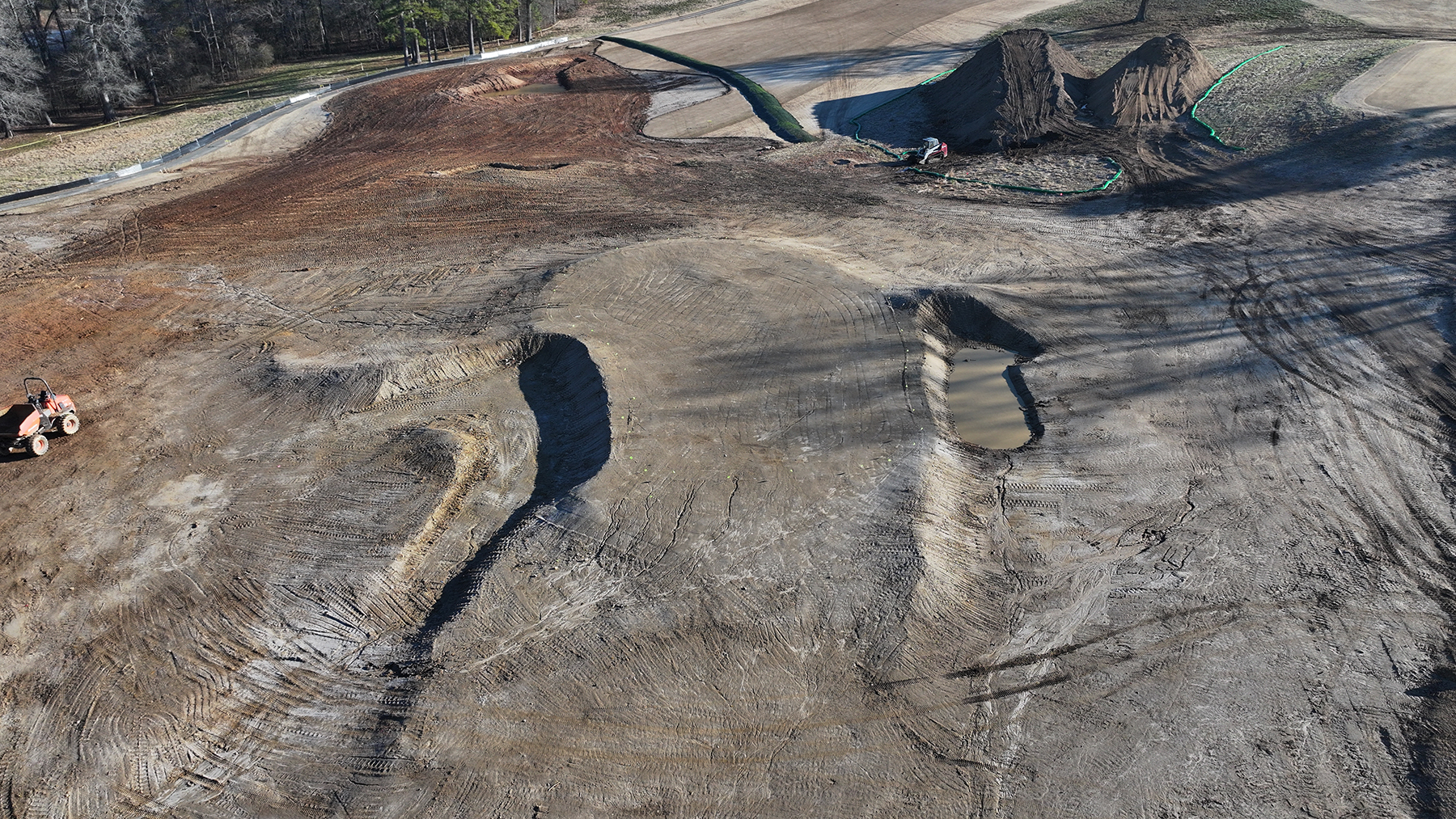
Building a model green from the existing rootzone, bunker sand, or imported soil provides the agronomy team with a preview of the final surface and helps them determine variable depth zones.
How Variable Depth Greens Are Built
Technology advancements, especially with scanning technology that has allowed historically significant golf courses such as Winged Foot, Merion, Augusta National, and many others to rebuild their greens and put the surface contours back to within 0.001 inch. The days of intensive staking greens contours have been replaced with green scans, Total Stations, and precision GPS-guided construction. The original idea for building variable depth greens was to adjust the contours in the subgrade, which in my opinion, made it very difficult for all parties to truly visualize the final greens contours. The recent variable depth projects I’ve worked on have all included the same basic process that involves the following:
- During the planning phase, the rootzone mix selected for the greens is rigorously tested for all traditional performance characteristics with a specific emphasis on a water release curve, which helps identify minimum and maximum rootzone depths for the high spots and low areas.
- Once construction is underway, the golf course architect builds a model green to the exact dimensions and contours of the desired green. To build the model, material from the existing rootzone, bunker sand, or soil hauled in from a nearby cut is used for rough and finish shaping. This model not only helps with variable depth planning, but it also helps the golf course architect design the best possible green and allows the contractor to get the tie-ins as smooth as possible.
- Next, the golf course architect and superintendent review the model green and adjust grades where necessary.
- The golf course construction contractor or a third-party vendor scans the model to capture the surface contours of the model green. The scans are converted to a PDF or image and sent to all key parties via email.
- Variable depth zones on each green area are determined/marked by the agronomy team, often with the help of an experienced consultant. The green scans and detailed inspection of the model are used to determine the specific zones. The growing environment, green design, the type of approach shot being hit into the green, and playability goals all factor into determining where to install the variable depth zones.
- The green scans are adjusted based on the desired location of the variable depth zones and the data is imported into Total Stations.
- The green cavity/model is then cored out and the green is rebuilt using scans/Total Station data. A traditional drainage network and gravel layer is installed prior to floating out the rootzone mix.
- The green is scanned again for review by the golf course architect. In most cases, adjustments are not needed at this phase because the golf course architect has already done the major shaping with the model green. However, minor adjustments are made where necessary at this point.
- The green is then scanned for a third time immediately before grassing to capture the final surface contours.
FAQ’s with Variable Depth Greens
Frequently asked questions about variable depth construction could be a standalone article. However, the following questions are ones I hear most often.
- Does variable depth cost more money?
Costs vary by the project, but most agree variable depth construction is more costly because of the additional scanning steps and potential for needing more rootzone mix than a uniform 12-inch rootzone depth. However, the added cost is worth it due to the improved performance and playability. In some instances, this method may actually save costs long-term because of a lower requirement for less hand watering mounds, ridges, and high spots.
- Can I just go with 10-inches of mix in high spots and 14-or 16-inches in low spots?
The simple answer is no, just picking these depths could lead to problems or more than likely less value from the variable depth method. The soil physical performance characteristics and water release curve data of the rootzone mix selected should be used to determine the minimum and maximum rootzone depths.
- Do I need to do variable depth for both high spots and low spots?
No. Several courses have focused on using only a deeper rootzone mix in low-lying areas or false fronts. The performance traits of the rootzone mix and your playability goals should drive the decisions on determining variable depth zones.
- Does the accumulation of topdressing sand over time impact the value of variable depth construction?
Research hasn’t confirmed the long-term impact of topdressing accumulation on variable depth greens. However, it seems reasonable that sand buildup would influence variable depth greens the same way it impacts greens built to a uniform 12-inch depth. That said, because topdressing sand is evenly applied and worked into the canopy, the variable depth zones are likely to remain intact and perform similarly.
- Can every contractor build a variable depth green?
In theory, the answer is yes assuming the contractor has the necessary equipment -i.e., Total Stations – to build greens with green scan data. However, experience is critical with golf course construction, especially when building putting greens. There are only few contractors that I’m aware of that have a lot of experience building variable depth greens.
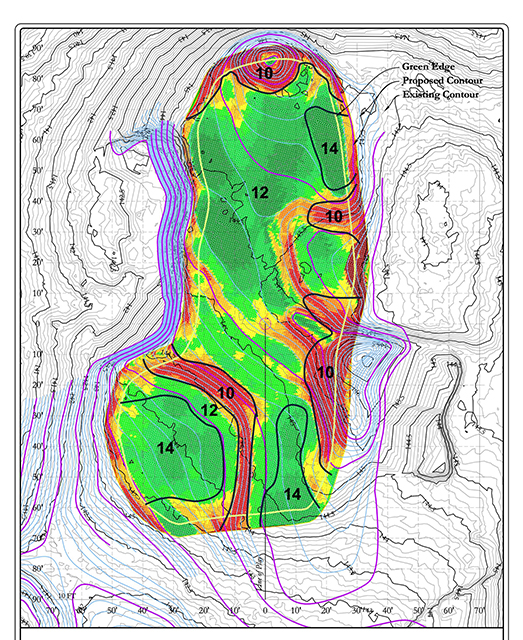
On this green, variable depth zones were marked at 10-inches, 12-inches, and 14-inches based on the rootzone mix performance traits, green contours/design, growing environment, and types of shots expected to be hit into it.
Conclusion
I am confident that variable depth construction is the future for building greens worldwide. However, this construction method requires proper planning and due diligence, including a full understanding of the rootzone mix selected for the greens. In part 2 of this series, we’ll dive into rootzone mix selection for greens construction, with a specific emphasis on how the performance characteristics influence determine the minimum and maximum depths to use when building variable depth greens.
About the Author: Adam Moeller has been a consulting agronomist for 18 years, partnering with clients to determine maintenance and renovation needs so their golf course can meet or exceed playability and turfgrass performance goals.
References
Frank, K; B Leach; J. Crum; P. Rieke; B. Leinauer; T. Nikolai; R. Calhoun. 2005. Effect of rootzone material and depth on moisture retention in undulating USGA putting greens. USGA Turfgrass and Environmental Research Online. Vol. 4. Number 11.

About the Author
Adam Moeller
Director of Agronomy – North America
Adam Moeller is the former director to the USGA Green Section Education and editor-in-chief of the USGA Green Section Record digital magazine. He has consulted with over 330 golf courses and collaborated with host superintendents to prepare 22 USGA national championships, including prestigious events like the U.S. Open and U.S. Women’s Open.
Adam is a highly accomplished individual with a Bachelor of Science degree in Horticulture from the University of Wisconsin and a Master of Science degree in Agronomy from Purdue University.
He is widely recognized as an industry leader and authority in his field, developing educational content for golf course superintendents, course officials, and golfers.
Due to his sought-after expertise, he frequently presents on golf course maintenance topics at turfgrass conferences in both the USA and at an international level.
In his free time, Adam loves to spend time with his wife and two sons. As an avid snowboarder and golfer, he enjoys seeing his young sons become interested in these sports.